Facade
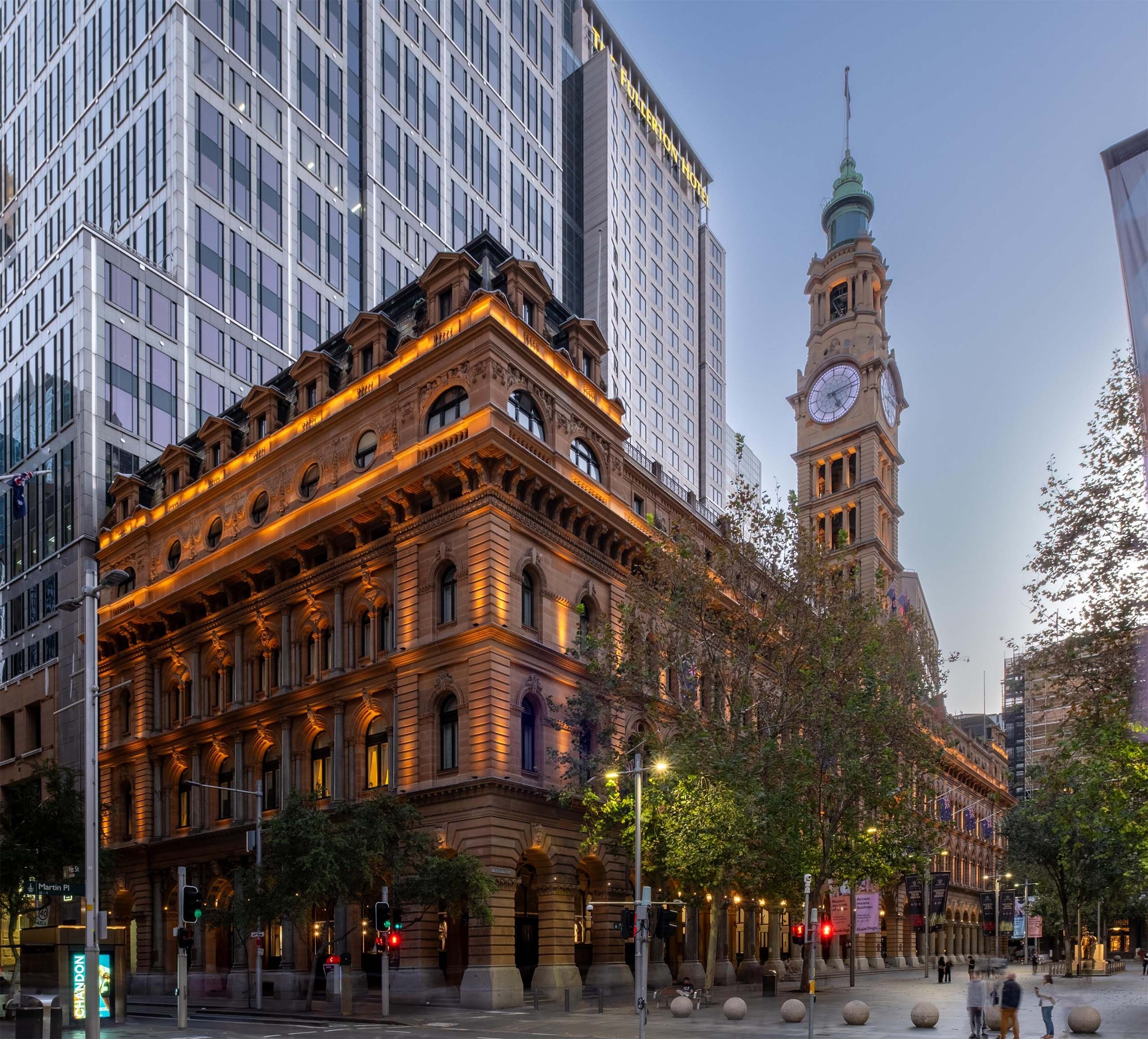
The Sydney GPO at One Martin Place has stood as a civic and architectural anchor in the heart of Sydney since 1866. Designed by colonial architect James Barnet and built using Pyrmont sandstone, its sweeping 114-metre façade is considered one of the finest examples of Victorian Italian Renaissance architecture in Australia.
Now, with the help of Lumascape luminaires, this heritage-listed landmark takes on a new presence after dark—subtle, precise, and at times spectacular.
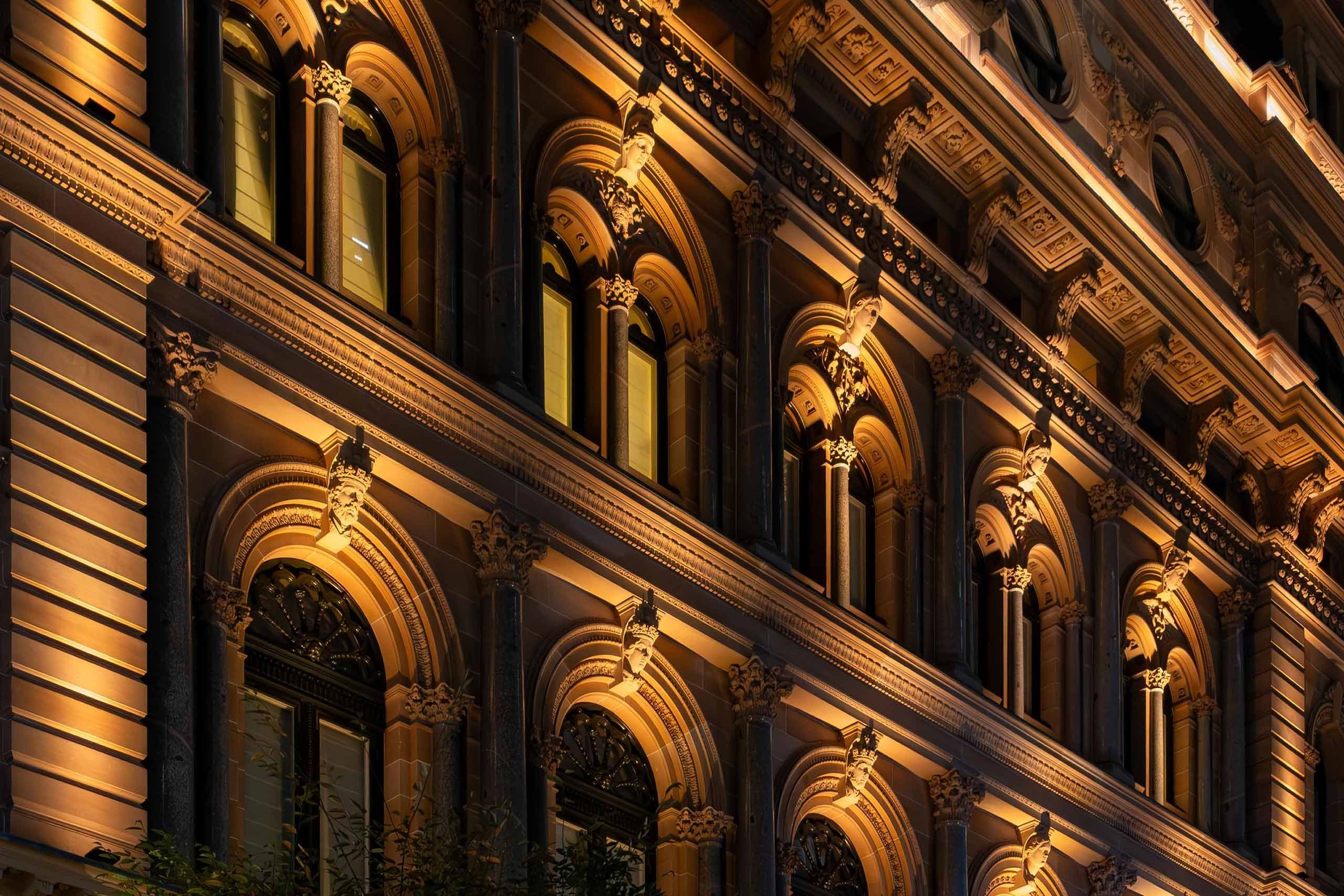
To highlight the building’s intricate stonework without overwhelming it, Lumascape supplied a tailored mix of Q2 projectors, Linealux L3 linear grazers, and Vestalux V2 floodlights. Carefully tuned to deliver a warm amber glow, the system enhances the depth and relief of every coat of arms, cornice, and archway along the sandstone exterior.
At rest, the amber tones complement the building’s natural material palette, gently encouraging visitors to pause, admire, and connect with the past. When needed, the same luminaires shift into RGBA mode, enabling dynamic color transitions, event-based lighting scenes, and expressive storytelling for occasions like Vivid Sydney, national holidays, or bespoke corporate events.
Throughout the installation, Lumascape optics ensure glare is minimized and hardware remains visually discreet, preserving the integrity of the heritage architecture. Behind the iconic clock faces, Vestalux V2 fixtures extend the lighting scheme upward and through the colonnades, allowing subtle pulses and fades to ripple across the arches below.
From soft static scenes to full-spectrum lighting animations, every element remains synchronized and programmable, offering curators maximum control with minimum disruption to the building’s appearance.
Lumascape’s portfolio is trusted on heritage buildings around the world for its combination of control precision, optical performance, and long-term reliability. Whether illuminating stone façades, civic icons, or sensitive cultural sites, our solutions help preserve the past while enhancing its presence in the present.
Photography: Hector Alvarez